
 Posted by
 Due to the international crisis caused by the Coronavirus outbreak, CONMEBOL, the governing body of South American football, was forced to reschedule the 2020 Copa América to the summer of 2021. In addition, CONMEBOL postponed the first two rounds of World Cup qualifiers from March to the beginning of September. Who are the main winners and losers from CONMEBOL’s announcement?
Winners
Venezuela
Ever since reaching the final of the 2017 U-20 World Cup, Venezuela has been under pressure to leverage their “golden generation” of young talent into tangible success at the senior level. La Vinotinto finished last in the qualifiers for Russia 2018, facilitating the promotion of the promising new generation to the senior side under head coach Rafael Dudamel.
This generational evolution began to take shape at the Copa América 2019. Venezuela had the second-youngest side of the South American participants, with an average age of 26.5. Three members of the 2017 U-20 team started in the quarterfinal against Argentina, while a fourth, rapid winger Yeferson Soteldo, made an impact off the bench in the second half.
Despite the excitement generated by the young players, a lethargic performance in the 2-0 defeat to Argentina increased the pressure on Dudamel and his players heading into 2020. The chances of Venezuela reaching their first-ever World Cup in Qatar decreased significantly this past January 2, when Dudamel presented his resignation. With only three months until the beginning of qualifiers, Dudamel’s surprise decision left Venezuela without a head coach. When Portuguese tactician José Peseiro was hired in early February, there was just over a month left before the opening match against Colombia.
Given Peseiro’s recent arrival, Venezuela is the main beneficiary from CONMEBOL’s decision to postpone the start of qualifiers until September. Undertaking his first job in South America, the delay gives Peseiro crucial time to familiarize himself with his players, develop a cogent style of play and study Venezuela’s rivals. Pushing back the qualifiers could be the difference between another Venezuelan failure and their first World Cup appearance.
Juan Fernando Quintero
Although he has not fulfilled the expectation generated when he signed for Porto at just 20 in the summer of 2013, Quintero is one of the continent’s best creative players on his day. A true number 10, Quintero’s defining characteristics are his imagination and wand of a left foot. Those virtues were on full display at the 2018 World Cup, when Quintero was Colombia’s best player.
Colombia underperformed in Russia before going out to England in the Round of 16, but Quintero’s connection with James Rodríguez was extremely promising. They combined to destroy Poland 3-0 in the second group stage match, and produced a similar effect after Quintero came on in the second half of the 4-2 demolition of the United States in an October 2018 friendly. Even though they operate in the same areas of the field, Quintero and James demonstrated a synergy that improved Colombia’s attacking output.
Quintero seemed set to play a key role at last summer’s Copa América under new coach Carlos Queiroz, but those dreams were dashed when “Juanfer” tore the ACL in his left knee during an Argentine Superliga match with River Plate in March 2019. Quintero returned to competitive action with River this past October, but has been limited to cameo appearances, playing only 392 minutes across 13 matches. With the postponement of World Cup qualifiers and the Copa América, which Colombia is slated to host with Argentina, Quintero will have plenty of time to get back to his decisive best.
Qatar
2019 was an unforgettable year for Qatari football. They won their first Asian Cup, defeating regional heavyweights South Korea and Japan along the way. They also participated in their first Copa América, and gave a good account of themselves despite going out in the group stages with just a point. A striking two-goal comeback in the second half to draw Paraguay in the first match was followed by a narrow 1-0 defeat to Colombia, who could not find the winner until Duván Zapata headed home in the 85th minute. Even a desperate Argentina side, fielding Lionel Messi, Sergio Agüero and Lautaro Martínez together up front, could only beat the Qataris 2-0.
As hosts, Qatar qualify automatically for the 2022 World Cup. Playing in their first-ever World Cup will give the tiny Gulf nation a chance to show how far their football has come, but could also lead to embarrassment if they join South Africa as the only host countries eliminated in the group stage. An invitation to the Copa América 2020 was welcomed as a way to gain competitive experience, but the tournament will be Qatar’s last meaningful matches before they open their own World Cup on November 21, 2022. As a result, the postponement of the Copa América to 2021 significantly reduces the amount of time Qatar will go without any competitive matches before their World Cup.
Losers
Peru
After years in the doldrums, Peruvian football was on a high after their performances at last summer’s Copa América. They validated their surprise qualification for Russia 2018, their first World Cup appearance in 36 years, with a shock run to the Copa América 2019 final. Although Peru lost to hosts Brazil, they produced a spirited performance, and were not out of the match until a Richarlison penalty in the 90th minute made the score 3-1.
The main factor in Peru’s stunning rise has been head coach Ricardo Gareca. A former Argentina international, Gareca took over the National Team job in March 2015. “El Flaco” has constructed a tactically adaptable side that is capable of giving the continent’s best teams serious problems.
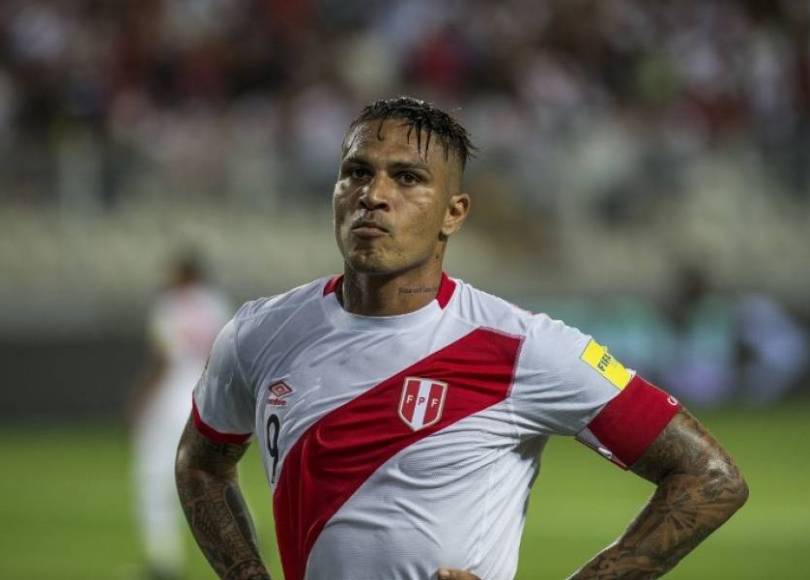
Although Gareca’s decision to stay on with La Bicolor is a boon for Peru, their hopes of qualifying for Qatar 2022 and repeating their Copa América success in 2021 are damaged by the Coronavirus outbreak. Paolo Guerrero, the top-scorer in National Team history with 39 goals in 101 appearances, will be 37 before the Copa América 2021. Jefferson Farfán, who is second to Guerrero on Peru’s all-time list of marksman with 27 strikes in 94 matches, turns 36 in October. Furthermore, Farfán has not played a competitive match since June 22, 2019, when he suffered a cartilage tear in his right knee during a 5-0 defeat to Brazil in the third group stage match of the Copa América. It remains to be seen whether Farfán can recapture the form that makes him such a danger for Peru.
A further complication for Peru is their lack of backup for Guerrero and Farfán. Their main alternative, Seattle Sounders striker Raúl Ruídiaz, has only 4 goals in 43 matches for his country. Eventually, Peru will need adequate replacements for Guerrero and Farfán if they hope to continue the success of recent years. However, Gareca will find the cupboard empty if he is forced to look for those replacements before the end of qualifying for Qatar 2022.
The Tournament Itself
From Venezuela 2007 through Chile 2015, CONMEBOL hosted the Copa América the summer after the previous World Cup. With qualifiers for the next World Cup more than six months away, Venezuela 2007, Argentina 2011 and Chile 2015 were crucial opportunities for the continents head coaches to fine-tune their squads before the slog of World Cup qualification began.
This trend was broken with the Copa América 2016 in the United States, which celebrated the 100th anniversary of the first edition of the tournament. Last spring, CONMEBOL decided to move the Copa América to even years in order to align with UEFA’s European Championship. As a result, Colombia/Argentina 2020 was added to the calendar. Before the Coronavirus outbreak, the tournament was set to take place with just two rounds of the grueling South American World Cup qualifiers played, giving the participants a chance to fully focus on fighting for glory in the Copa América.
However, the postponement of the Copa América to summer 2021 means that the tournament will take a backseat to the qualifiers for Qatar 2022, which will be past their midway point. The last time the Copa América was played so deep into the World Cup qualifiers was almost 20 years ago, when Colombia hosted in 2001. It remains to be seen how that affects the quality on display in Colombia and Argentina next summer.
 Just for Kicks