
 Posted by
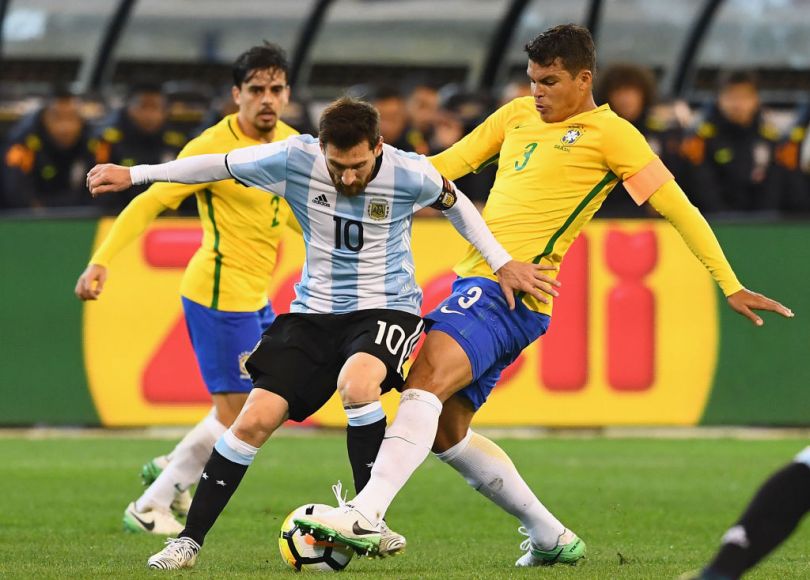
 Tonight, Belo Horizonte’s Estadio Mineirão will play host to the 106th meeting between Brazil and Argentina in the Superclásico de las Américas. Although Brazil have the upper hand all-time with 42 wins, Argentina have the better record in Copa América matches, with 15 wins to 9 for La Canarinha. Nevertheless, past encounters between these sides suggest that Brazil should brush aside La Albiceleste in this Copa América semifinal. Brazil have never lost at home to Argentina in a match “for points” (Copa América or World Cup Qualifier), with 8 wins and 2 draws in 10 games.
Nevertheless, there are reasons for the Argentines to be encouraged heading into this massive semifinal. Despite the home-field advantage they enjoy as hosts of the tournament, Brazil have traveled 3,171 miles so far in this tournament. On the other hand, Argentina have traveled only 2,344 miles, a whopping 826 miles fewer than their opponents. This comparison takes on even deeper meaning given that this semifinal comes at the end of a long, grueling club season for most of the players involved. After playing up to 65 games since mid-August, many players are at a breaking point physically. Those 800-plus miles could make a substantial difference in the latter stages of this match.
Another factor that gives Argentina hope is the state of the pitch at the Estadio Minierão. CONMEBOL has not allowed either side to train on the field in the lead-up to this match, hoping to salvage the bobbly surface. The deplorable quality of the Brazilian fields has been a huge talking point so far this tournament, with Sao Paulo’s Arena Corinthians the only pitch in optimal condition.
In their only match in this Copa América on Corinthians’ well-manicured home field, Brazil dispatched Peru 5-0, turning in their most convincing performance so far. However, in their other three matches on poorer fields, they have struggled to open up massed defenses. Two of those games (the group-stage match against Venezuela and the quarterfinal against Paraguay) ended scoreless, while Scratch do Ouro had to wait until the second half to take the lead in the tournament opener against Bolivia. Brazil have controlled the ball in all four of their matches so far, averaging 71% possession. They are much more reliant on a possession-based style than the Argentines, who have averaged just over 50% possession in their four matches, and had only 40% of the ball in the quarterfinal win against Venezuela. A bobbly pitch at the Estadio Mineirão could be a considerable hindrance to Brazil, with a resulting advantage to Argentina.
Argentina’s performance against La Vinotino, while not overly convincing, was their best of the tournament so far, and should provide the blueprint for coach Lionel Scaloni heading into this match. Against Venezuela, Scaloni kept the imposing front three of Sergio Agüero, Lautaro Martínez and Lionel Messi after using them from the start in final group stage match against Qatar. Their presence up top allowed Argentina to control the play early on, with their center-backs able to move up towards the halfway line and keep Venezuela pinned back in their own end. Although Messi and Agüero have both struggled so far during this Copa, Martínez has been a revelation, scoring the crucial opening strikes against Qatar and Venezuela. He now has 6 goals in 10 games during the Scaloni era, making him Argentina’s top scorer in that time.
With Brazil likely to hog possession and territory, playing with two center-forwards with Messi in behind could benefit Argentina both offensively and defensively. Both Martínez and Agüero are capable of running the channels, with the former especially adept at holding the ball up and bringing teammates into play. As a result, these two players will give Argentina a crucial out ball for the moments when they come under pressure from the Brazilian attack. Furthermore, their mere presence, together with Messi, could make Brazil’s game plan more defensive. Star right-back Dani Alves has been essential for Brazil going forward so far this tournament, constantly bombing on and playing almost as an auxiliary midfielder. However, doing the same against Argentina could leave space in behind for Martínez and Agüero to exploit. Finally, Martínez and Agüero (in particular) have the ability to get in behind a high line using their clever movement and pace. This could deter Brazil from moving their center-backs too far up the field, in the process forcing La Verdeamarelha to either sit deeper than they would like or create huge gaps between their defense and midfield when they attack, which would leave space for the always dangerous Messi to exploit.
The big danger for Argentina in this match should come when they are defending, particularly down their right flank. All three of their opponent’s goals have come down that side so far this tournament, with Scaloni constantly changing the occupant of the right-back spot. Racing man Renzo Saravia started there against Colombia and Qatar, with River Plate’s Milton Casco given a shot in the second group stage match against Paraguay.
However, neither option convinced Scaloni, who chose to line up young center-back Juan Foyth out of position against Venezuela. Although Foyth has played that position occasionally for Mauricio Pochettino at Tottenham, he looked shaky against Venezuela’s Darwin Machís. The Cadíz winger repeatedly got in behind Foyth on the dribble in the first half, forcing the former Estudiantes de la Plata defender into risky last ditch challenges in the box. Unfortunately for Foyth and Argentina, he will now be going up against Everton, Brazil’s most in-form player and a much trickier customer than Machís. With right center-back Germán Pezzella slow to cover his right-back in one on one situations (as evidenced by Roger Martínez’s opener for Colombia in the first group stage match) right midfielder Rodrigo de Paul will be particularly important in this match not only for his work in the middle with Leandro Paredes, but also the defensive help he can provide to Foyth.
 Just for Kicks