
 Posted by
 Besides the entertainment provided by soccer teams on the pitch, fans worldwide find themselves amused by the nicknames associated with various teams. Almost every team, at club or international level, has a nickname. Often, these nicknames simply reference the color of the team’s jerseys (think the Liverpool Reds and the Chelsea Blues), or shorten the team’s name (think Inter and Barca). However, there are some nicknames that stand out for their creativity and even comedic value. Below I have compiled five of the best team nicknames in the world of soccer.
Everton – The Toffees
One of the most historic clubs in English soccer, Everton have played more seasons in the country’s top division than any other team. In addition to their rich history, the club also boast one of the best nicknames in the world of football, the Toffees.
There are multiple accounts to explain the origin of the nickname, all of which stretch back to the opening of Goodison Park in 1892. The best-known theory references the existence of a toffee shop known as Mother Noblett’s, located in Everton Village, that sold Everton Mints and other candies. Others believe that the nickname could have been inspired by Ye Anciente Everton Toffee House, which was located near the Queen’s Head Hotel, where many early club meetings took place.
Regardless of what inspired the creation of Everton’s nickname, the club’s connection to their nickname is still evident on matchdays. Before the start of games at Goodison Park, a girl walks around the outer edge of the field throwing Everton Mints out to the crowd, keeping alive the Toffee Lady tradition started more than 120 years ago.
Chievo Verona – The Flying Donkeys
One of the smallest clubs in Serie A, Chievo have defied the odds to stay in Italy’s top division since the 2008-2009 season. Before that, the club had enjoyed six campaigns at Calcio’s top table between 2001 and 2007. Due to the club’s poor attendance figures (they averaged only 11,886 fans during the 2017-18 season), they are mostly reliant on income from television rights to stay afloat.
Although Chievo have worked their way into the consciousness of Serie A followers in recent years, they are still not even the biggest club in their own city. That distinction belongs to Hellas Verona, which became Serie A champions in 1984-85. The two teams share the same stadium, the Stadio Marc’Antonio Bentegodi. In the 2001-02 season, when both teams were in Serie A, the Chievo fans were placed in the ‘away’ section for their ‘home’ derby against Hellas due to the higher number of Hellas fans in attendance.
However, the fact that the two teams were even facing off in Serie A was already an embarrassment for Hellas, given the responsibility they had in giving Chievo their Flying Donkeys nickname. During the 1990’s, Hellas fans mocked their crosstown rivals by saying that Chievo would only be promoted to Serie A if “donkeys could fly”. With Hellas suffering relegation from Serie A at the end of the 2017-18 season, the tables have been turned, and donkeys everywhere have sprouted wings.
Hartlepool United FC – Monkey Hangers
Undoubtedly the silliest nickname in all of soccer, the origins of Hartlepool’s monkey hangers nickname can be traced all the way back to the Napoleonic Wars. During that time, legend has it that there was a French ship wreck off the coast of Hartlepool. The only survivor from the ship was a monkey. Back then, the residents of Hartlepool had never seen a Frenchmen or a monkey. This led them to believe that the monkey was a French spy, and they duly held an impromptu trial for the unfortunate primate. The monkey was eventually sentenced to death and was hanged on the same beach where his ship was wrecked.
While the origins of Hartlepool’s nickname marks a dark time in the history of monkeys, the nickname has become politically relevant in recent years. During the 2002 Hartlepool town council election, the team’s mascot, H’Angus the Monkey, aka Stuart Drummond, became Hartlepool’s mayor, championing the slogan “free bananas for schoolchildren”. While Drummond’s candidacy was simply a publicity stunt, he was subsequently re-elected and served as the town’s mayor for more than 10 years, gradually becoming a serious politician linked to the Labour party.
South Africa National Team – Bafana Bafana
The South African National Team’s nickname, like the team’s participation in international competition, is a fairly recent phenomenon. Bafana Bafana is Zulu for “the boys, the boys”. The expression was first invoked by South African fans during their match against Cameroon on July 7, 1992. The match represented the nation’s first competitive game since being reinstated to FIFA on July 3, 1992.
Following the match, the nickname was picked up by the South African newspaper The Sowetan, which began to use the name in print to refer to the team. Nevertheless, the South African Football Association was skeptical about the commercial viability of the nickname. Furthermore, they believed it was demeaning to refer to a men’s team as boys. These reservations meant that the name was initially only used informally. Yet, within a few years, the South African Football Association had initiated the processes to trademark the nickname.
Greece National Team – The Pirate Ship
The undoubted high-point of Greek soccer came in the summer of 2004, when the Greek National Team won EURO 2004, beating hosts Portugal 1-0 in the final. Before the start of the tournament, the Greeks were given 80-1 odds of becoming champions. The EURO 2004 title represents Greece’s first and only major trophy at the international level.
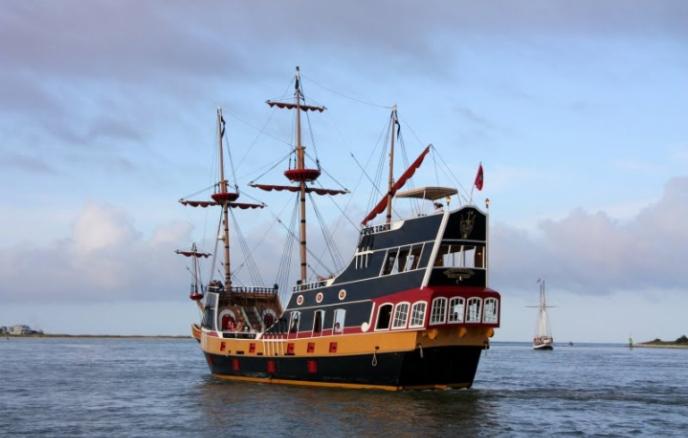
In addition to being the pinnacle of Greek soccer, EURO 2004 also saw the National Team bestowed with one of the best nicknames around. The final against Portugal represented the second time the two teams faced off that summer, as they also played each other in the inaugural match of the tournament. At the opening ceremony before the start of that match, a model of a 16th century ship was paraded across the field in reference to the Portuguese explorers of the age.
During the match, Greek radio commentator Georgios Helakis remarked that “since the Portugese team appeared in such a ship, it’s time for us to become pirates and steal the victory”. Greece went on to win that match 2-1, with goals from Giorgios Karagounis and Angelos Basinas. From that point on, the Pirate Ship nickname was invoked during every match of Greece’s route to the final. After they were crowned champions, the nickname stuck, becoming a lasting reference to the nation’s success at EURO 2004.
 Just for Kicks