

 Posted by
 The eyes of the world are on Russia this summer for the 21st edition of the World Cup. While most people will be paying attention to the soccer itself, the shirts that each team wears will also be in the spotlight. With Nike and Adidas sponsoring 22 of the 32 participating nations, there is not much room for variation between the different designs. However, some shirts have managed to stick out, for better or worse. Here are my three best and three worst shirts of this World Cup:
Best:
Uruguay Home
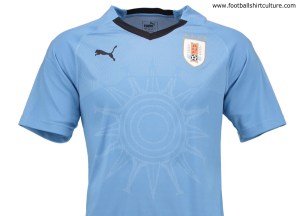
Champions and hosts of the first World Cup in 1930, the Uruguayan national team is one of the most iconic sides in international soccer. This rich history extends to the color of their home shirt, which has been sky blue since 1910. The sky blue gives any manufacturer that sponsor’s the Uruguayan national team an advantage when trying to design a stylish shirt, as the color is instantly recognizable without being ostentatious.
Shirt sponsor Puma continues the tradition of a sky blue home shirt, producing their best design out of the four national teams they are dressing at this World Cup. In addition to the sky blue base, the sportswear giant has added black detailing on the Puma logo and collar. Furthermore, there is a large sun motif in the center section of the shirt. The motif is inspired by the Sol de Atlántida monument, which was constructed in honor of Uruguayan painter Carlos Páez Vilaró. In addition, the sun figure also bears a resemblance to the Sol de Mayo that appears on the Uruguayan flag, which makes the design clearly identifiable as a reference to an element of the country’s culture. This stands in contrast to Puma’s center graphic on the Switzerland home shirt they created for this World Cup, which is discussed below.
Peru Home
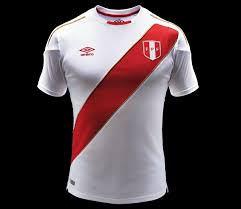
Many of the jerseys at this World Cup, such as Spain’s and Nigeria’s home designs, harken back to designs that the teams sported during the 1990’s. However, Peru’s home shirt is far more historic. The white shirt with a diagonal red sash running from the left shoulder to the right hip has been worn by the South American country since the 1936 Olympic Games in Berlin.
For the country’s first World Cup in 36 years, shirt sponsor Umbro has not changed the traditional formula for the home design, using the white base and diagonal red sash. The British manufacturer has accentuated this already elegant look with gold detailing on the shoulders and on the edges of the sash. Although this is Umbro’s last shirt design for the Peruvian National Team, who have signed a deal with Ecuadorian brand Marathon that goes into effect at the beginning of August 2018, they go out on a high note with this effort.
Nigeria Home
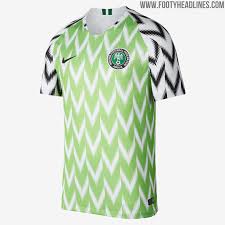
This Nike-designed shirt has undoubtedly caused more of a stir than any other shirt released for this World Cup. The shirt sold out in minutes after three million pre-orders. At Nike’s flagship store in London, there were hours-long lines the day it went on sale. The shirt has been widely acclaimed in fashion circles as well, with New York Times chief fashion critic Vanessa Friedman giving her approval, while style website Highsnobiety ranked it as the best out of the 32 home shirts on display in Russia.
Historically, Nigeria has worn an all-green home shirt. Yet, this time they are sporting an audacious green and white zig-zag design that at once pays tribute to the country’s home shirt worn during the 1994 World Cup and to Naija culture. According to Nike, Naija “reflects a youthful exuberance, pride and fresh perspective on (Nigerian) patriotism”, while Naija fashion is radiant and exuberant. Nike certainly transmits the fashion proclivities of Naija culture with this shirt, producing a shirt that looks completely different from any other that will be on show in Russia.
Worst:
Iceland Home
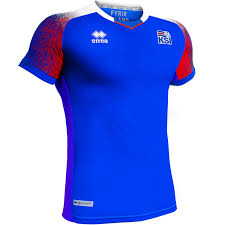
After their heroic performances at EURO 2016 saw Iceland make the quarterfinals, international attention has increased around the country’s national team. Since then, the tiny Nordic nation, with a population of 334,000 people, have put themselves more firmly into the spotlight by qualifying for the World Cup and drawing international powerhouse Argentina in their first game. However, given the appearance of their home shirt for the tournament, Icelanders may wish that nobody was paying attention.
Iceland’s home and away shirts are the only ones at the World Cup designed by Érrea. The home shirt incorporates the traditional colors of blue, red and white, with blue being the primary color used. The most noteworthy element of this shirt is the pixelated design on the sleeves, which transitions from white at the shoulders to red/blue in the middle and pure blue by the bottom portion of the sleeve. According to Érrea, the pixelated sleeves pay homage to Iceland’s geysers, with the white representing ice, red representing the heat under the earth’s surface that melts the ice, and the blue representing the water that spews out of the geysers. Yet, in practice the design looks garish, not stylish.
Switzerland Home

The stand-out feature of this Puma shirt is the large graphic that covers the entire front side. Printed graphics on the front of shirts have been a popular design feature for the German sportswear manufacturer over the last 10-plus years. Typically, these graphics represent the team’s nickname or something culturally relevant to the country. For example, Ivory Coast’s home jersey for the 2006 World Cup featured a graphic of a grazing elephant on the front, paying homage to the team’s nickname, Les Elephants.
However, in the case of this Switzerland shirt, it is not clear upon first viewing what Puma is trying to represent with the graphic it has chosen. According to the German sportswear manufacturer, the graphic represents a topographic map of the Matterhorn, one of Switzerland’s most famous landmarks. However, most people watching the World Cup on TV will not be aware of the inspiration for Puma’s design. To my eye, the Matterhorn graphic looks like a giant fingerprint. Others, such as Swiss newspaper Blick, have questioned if the graphic is a close-up of a brain.
Although the Swiss home jerseys are ugly, at least their structural integrity is guaranteed. During EURO 2016, no less than six Swiss jerseys ripped during play, leading Puma to apologize. This time around, the company’s CEO, Biørn Gulden, has guaranteed that this jersey is much sturdier, commenting that “we have tested them, stretched them, thrown them on the floor. . .they are not going to break, they are almost bomb-proof shirts”. In the event of an apocalypse during Russia 2018, Switzerland’s jersey will still be around. Until that happens though, this jersey is one of the World Cup’s worst.
Russia Home
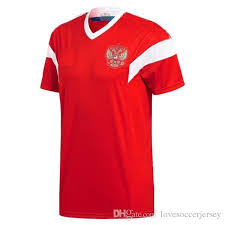
For their first home World Cup, Russia has pulled out all the stops. $14.2 billion has been spent to organize the tournament, the most of any World Cup in history. Transportation infrastructure and hotels in the country were reinforced, while 9 stadiums were built new for the tournament. By virtue of being the host, the Russian National Team booked their spot in the World Cup when their nation won the bidding process on December 2, 2010. Given the more than 8 years Adidas had to mull over a shirt design, coupled with the effort Russia put into hosting the World Cup, one would have expected a better home shirt than what has been produced.
In design terms, any Adidas shirt is hurt by the company’s custom of including in their shirts three stripes going down the shoulders and sleeves, a reference to their three stripes logo. This move is unnecessary, as Adidas also puts their logo on the right breast of every shirt they produce. Thankfully, the three stripes on this jersey stop at the shoulders and don’t go down the sleeves, making them somewhat less distracting from the rest of the design. This isn’t necessarily a good thing in this case though, as the Russia shirt in general looks like an outdated Adidas template from the mid-to-late 2000’s. With the Russian National Team having won their first two group stage games at the time of writing, Russians can be proud of their team. However, they can be rather less proud of what their team is wearing.
 Just for Kicks